Collaborative, interdisciplinary research in ecological forecasting
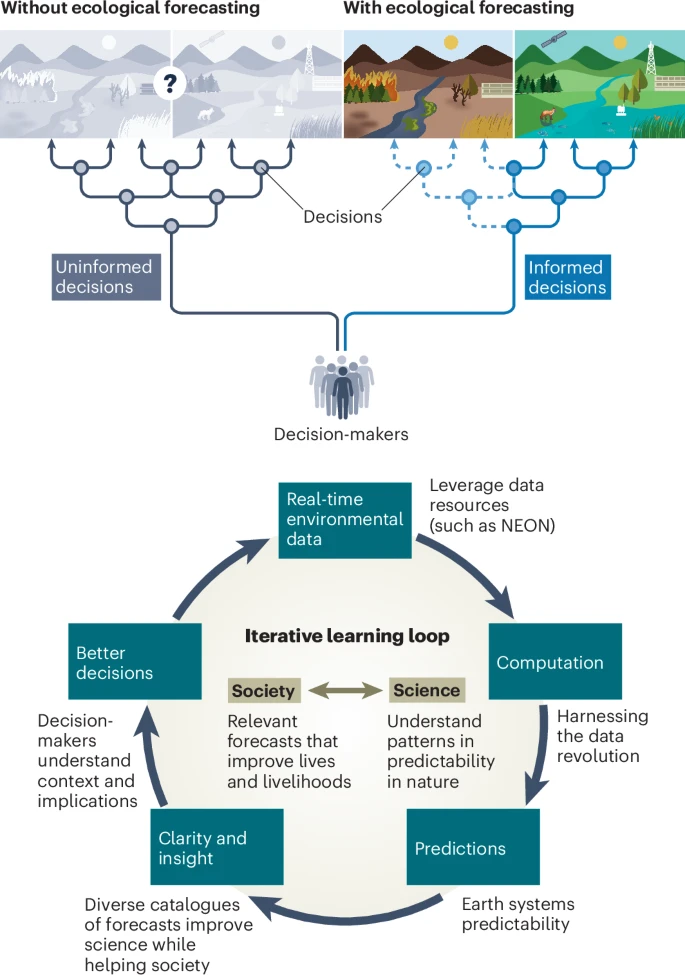
Ecological forecasting is an emerging field that integrates environmental science, statistics, decision science, and climate science with the goal of making quantitative, decision-relevant predictions by combining models and data (Woelmer et al. 2021). As a leader in the Ecological Forecasting Initiative, I have been involved in a number of publications laying the foundation of the discipline (Dietze et al. 2024), including establishing a unifying forecasting lexicon (Sjodin et al. in review). I also contributed to the development of the NEON Ecological Forecasting Challenge, a platform for scientists to make comparable ecological forecasts, inspired by data science challenges (Thomas et al. 2023).
A compelling aspect of ecological forecasting for me is the opportunity to collaborate widely. For instance, I recently collaborated with aquatic ecologists to produce a long-term forecast of Alaskan wetland temperatures. We found that Alaskan wetlands are at high risk for crossing a temperature threshold for salmon viability, with implications for managing wild populations of these culturally and economically important species (Adey et al. in press). I am eager to contribute my ecological forecasting expertise to new contexts and I'm always looking for new collaborations! If you're interested in developing a project together, please contact me!